

Child Welfare Information Gateway
DESIGNED FOR WEB AND WEB RESPONSIVE
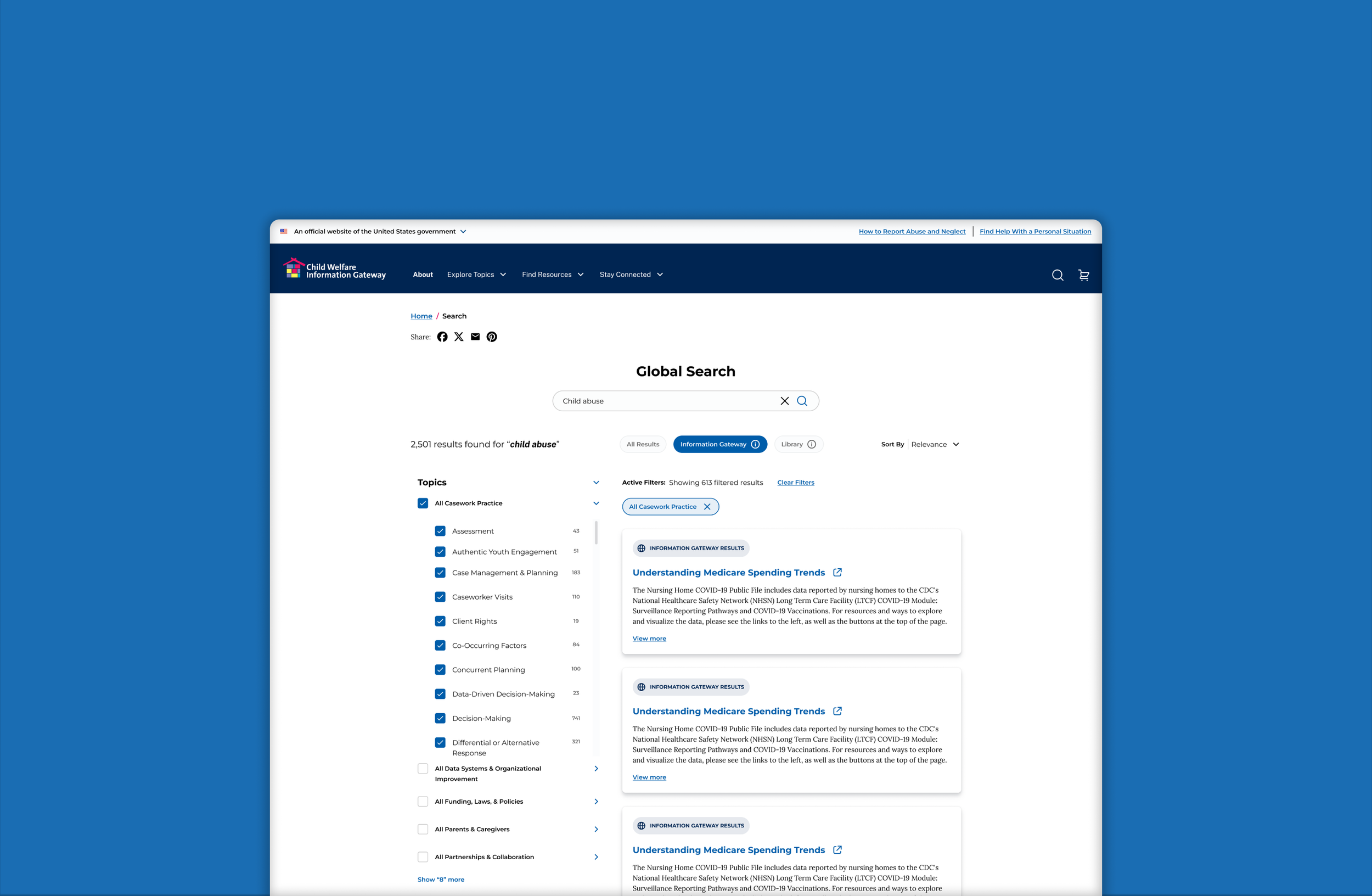
The Child Welfare Information Gateway (CWIG) is a national resource that provides reliable, evidence-based information on child welfare, child abuse prevention, foster care, adoption, and family support services. Funded by the U.S. Department of Health and Human Services, it serves child welfare professionals, policymakers, educators, and families by offering research, best practices, training materials, and state-specific laws and policies. The website's goal is to improve the safety, permanency, and well-being of children and families by making current, trusted child welfare information easily accessible.
INTRODUCTION
This project focuses on redesigning the Child Welfare Information Gateway's search experience by improving the combined search and filtering system. The goal of the redesign was to create a more intuitive, reliable, and efficient way for users to find child welfare resources. By addressing usability issues, simplifying the filtering process, and making specialized resources easier to access, the redesigned experience helps users locate relevant information with less frustration.
OVERVIEW
MY ROLE:
Senior UX UI Designer
Responsible for in-depth research and end-to-end design of the combined search and filter experience.
THE TEAM:
1 UX UI Designer, 1 Product Owner, 5+ developers.
TIMELINE:
Dec 2025 — July 2026
WHAT USERS ARE SAYING
“Missing resources like training links, state statutes, contact information, and updated policies.“


“Search results do not match my keyword search.”

“Too many filters and subcategories.”

The original Child Welfare Information Gateway search experience presented several usability challenges that made it difficult for users to find the information they needed. Users frequently encountered broken links, error pages, and missing resources, including training materials, state statutes, adoption information, and contact details. These issues reduced confidence in the search results and often interrupted users' workflows.
The filtering system also created significant usability problems. Users could select filter categories that did not correspond to their search terms, resulting in empty results or error pages rather than helpful guidance. In addition, the filter panel continuously expanded as more categories became available, creating a long, cluttered interface that was difficult to scan and navigate.
Another challenge involved the website's separate Library search page, which housed scholarly publications and research resources. Because this search experience was located within a different section of the website, many users were unaware of its existence or had difficulty finding it. As a result, valuable research materials were often overlooked, requiring users to perform additional navigation before locating the resources they needed.
IDENTIFYING THE PROBLEM
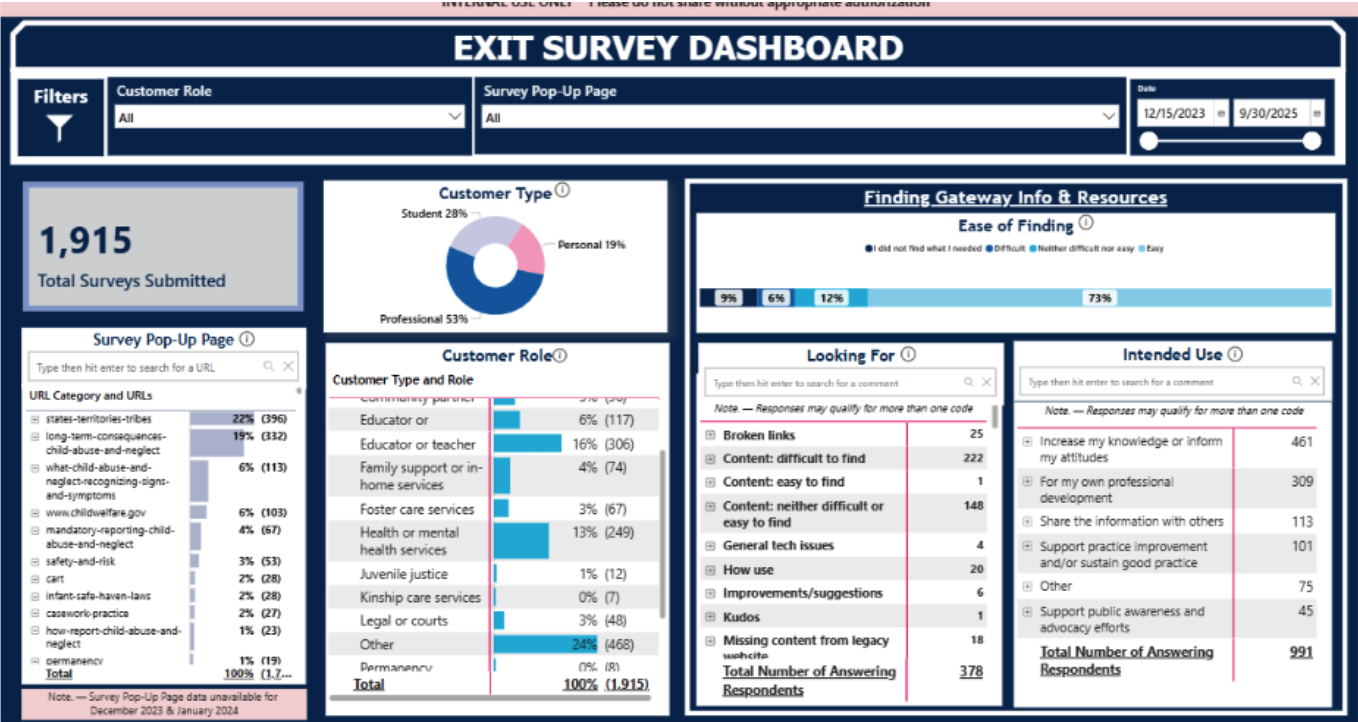
To better understand the challenges within the existing search experience, I collaborated with key stakeholders and members of the data science team. These conversations helped identify both user pain points and technical limitations that influenced the redesign.
RESEARCH
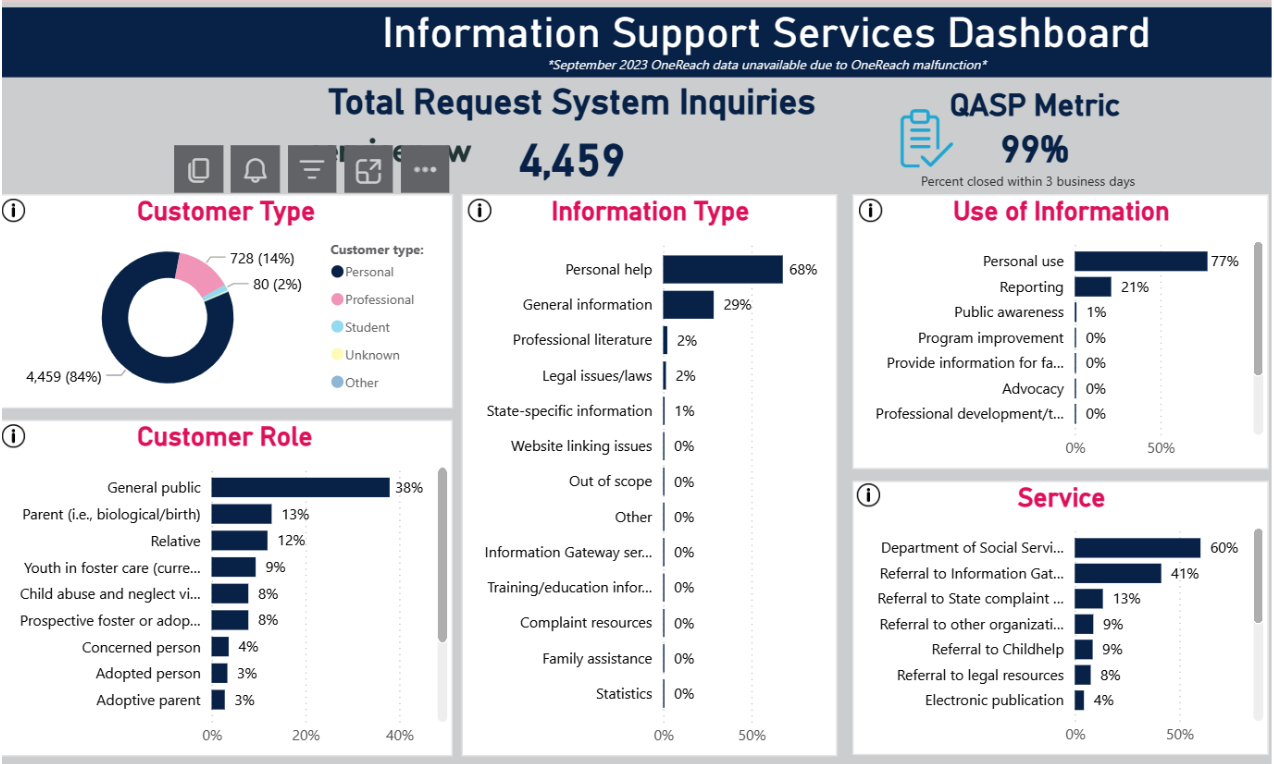
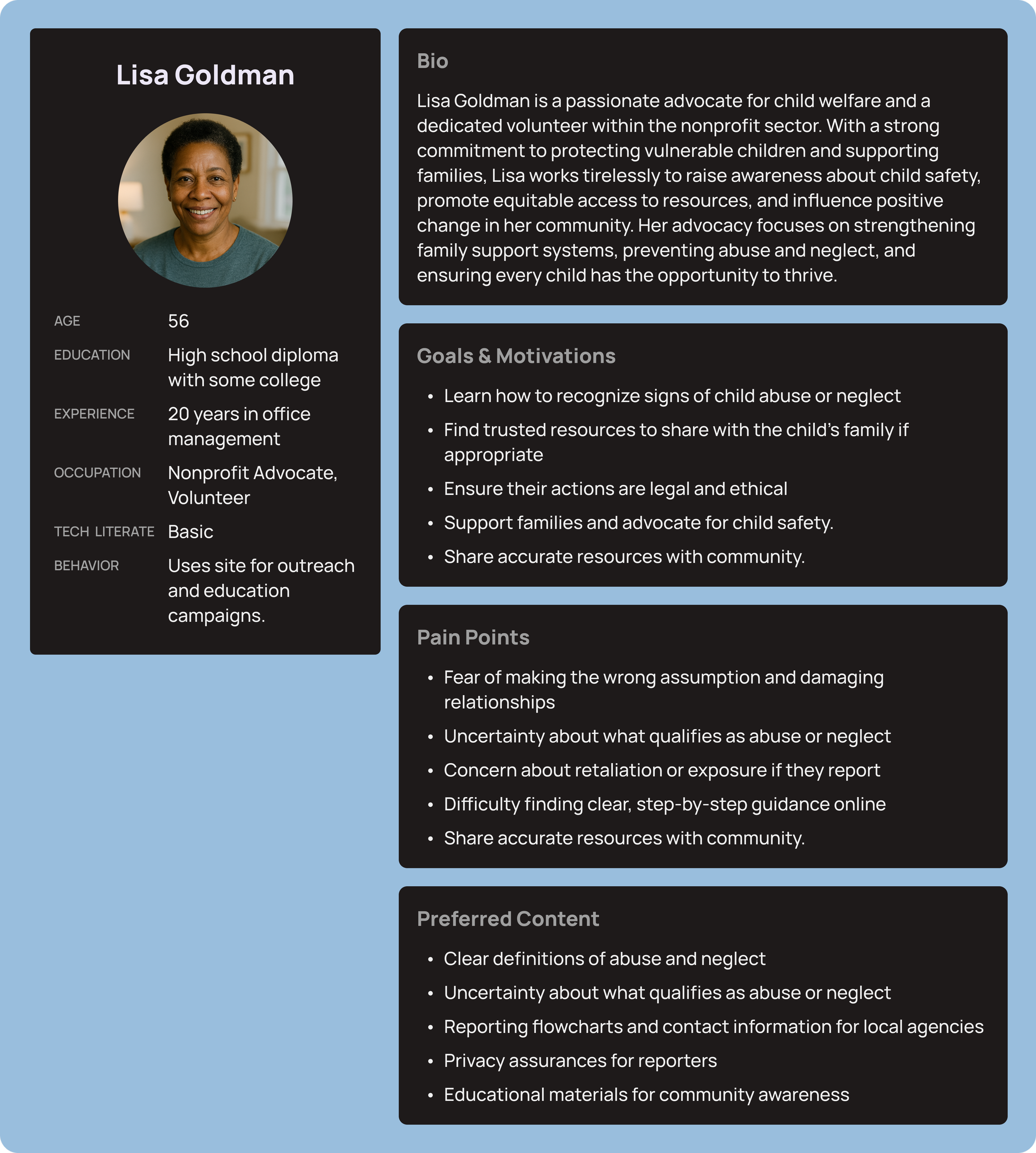
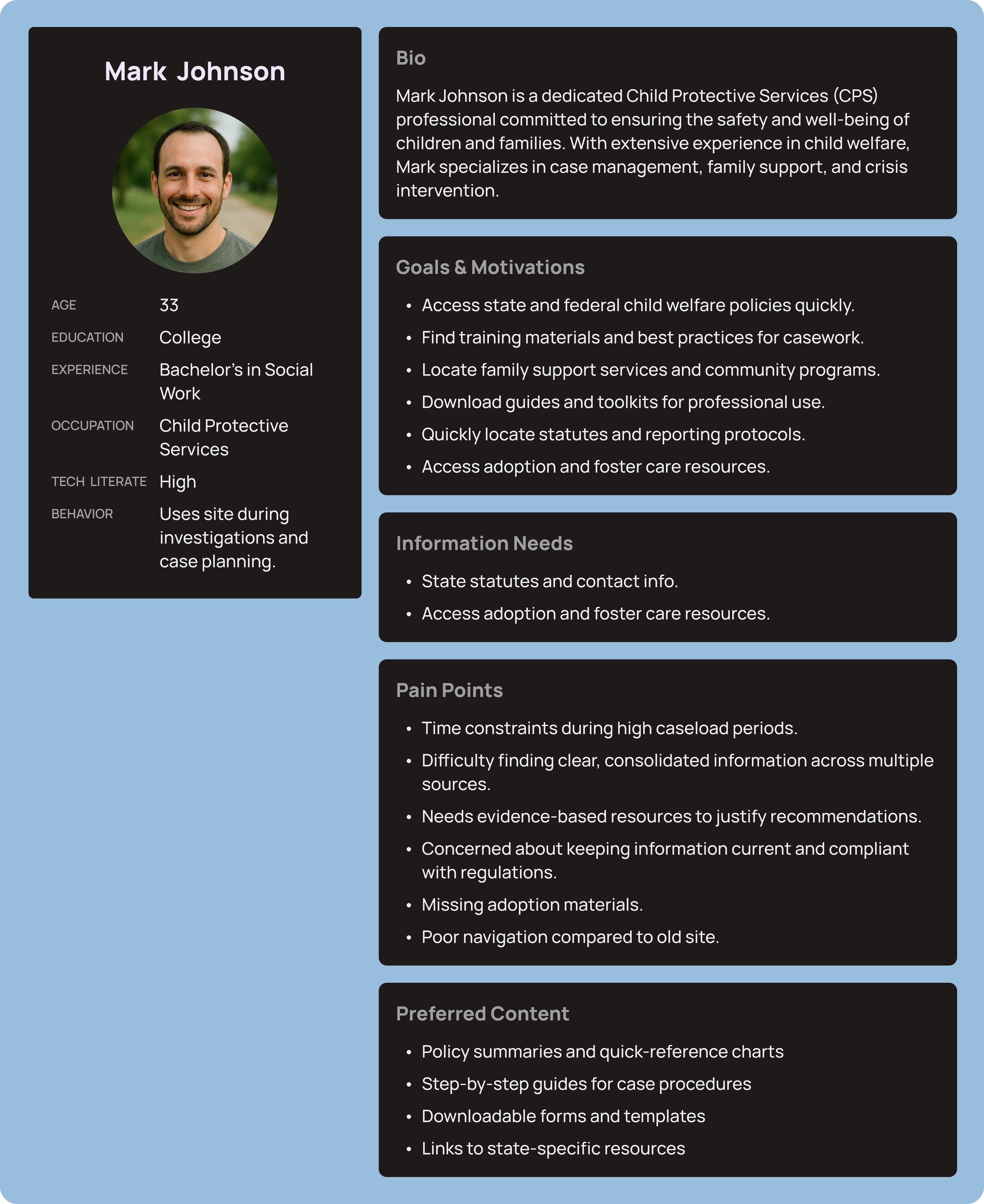
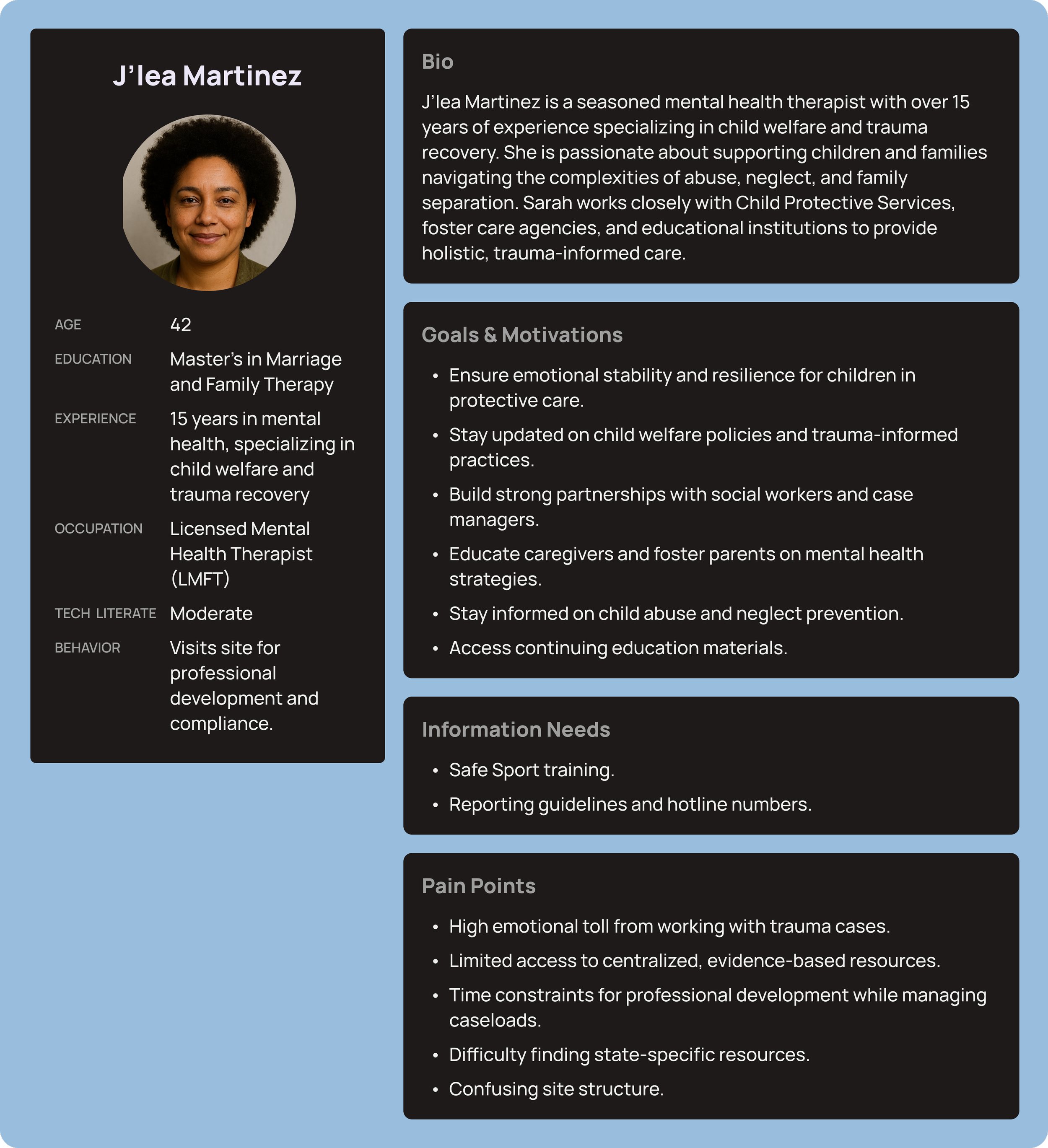
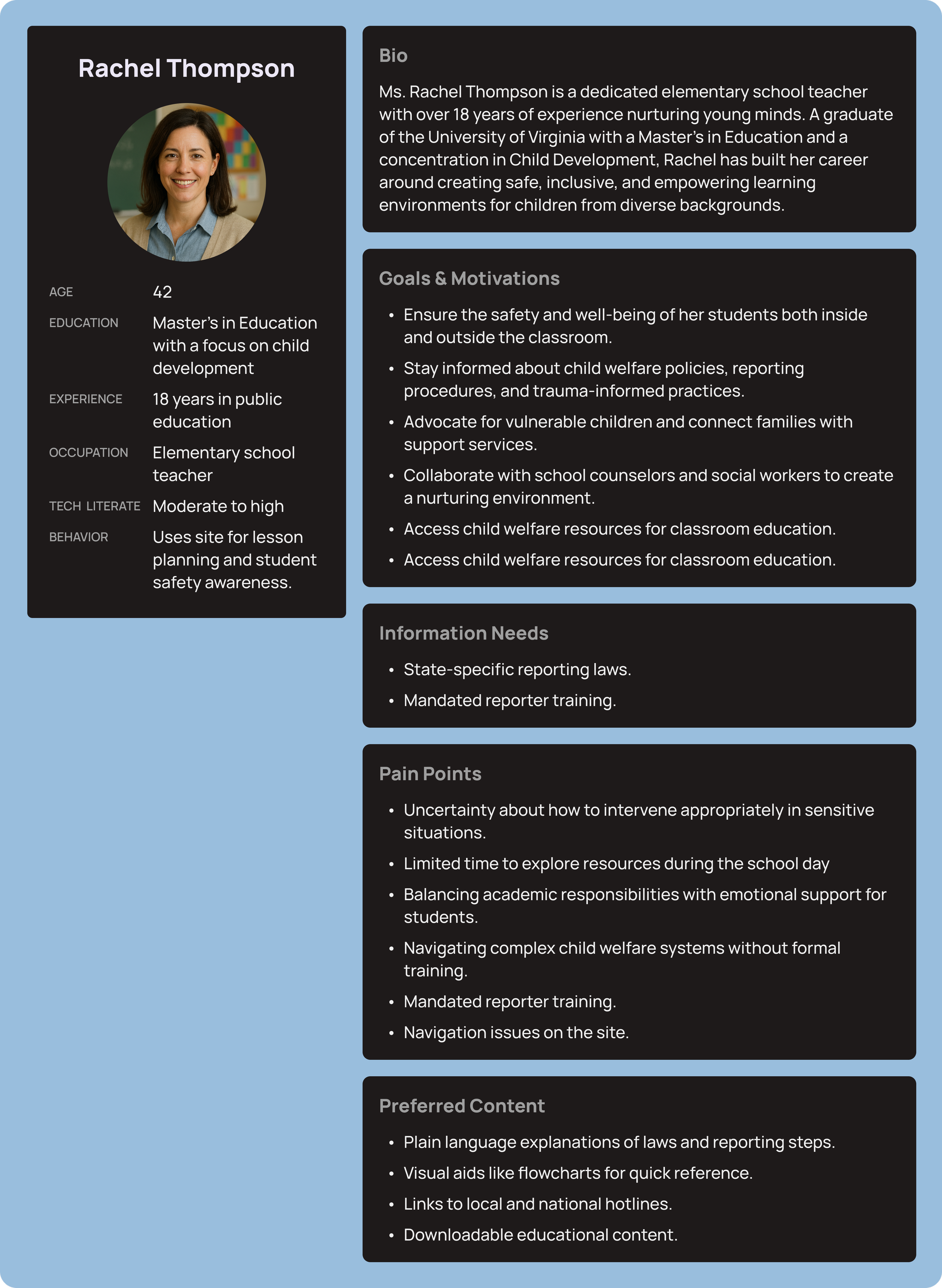
The Child Welfare Information Gateway serves a wide range of professionals who rely on trusted, evidence-based resources to support children and families. Understanding who these users are and what they need helped inform design decisions focused on making information easier to find, understand, and apply.
Educators and Teachers (16%) use the site to better understand how child welfare issues can impact students. They look for practical guidance, training materials, and resources that help them recognize signs of abuse or neglect, support student well-being, and connect families with appropriate services.
Health and Mental Health Specialists (13%) visit the site to access research, best practices, and clinical resources that support trauma-informed care and child development. They need reliable, up-to-date information they can quickly incorporate into their work with children and families.
Child Protective Services Professionals (9%) rely on the Information Gateway as a trusted reference for policies, legal guidance, and evidence-based practices. Their work often requires finding accurate information efficiently, making clear navigation and organized content essential.
Community and Family Support Professionals (9%) use the site to identify programs, educational materials, and services that strengthen families and connect them with local support. They value accessible, easy-to-share resources that help them guide parents and caregivers toward the right assistance.
USER PERSONAS
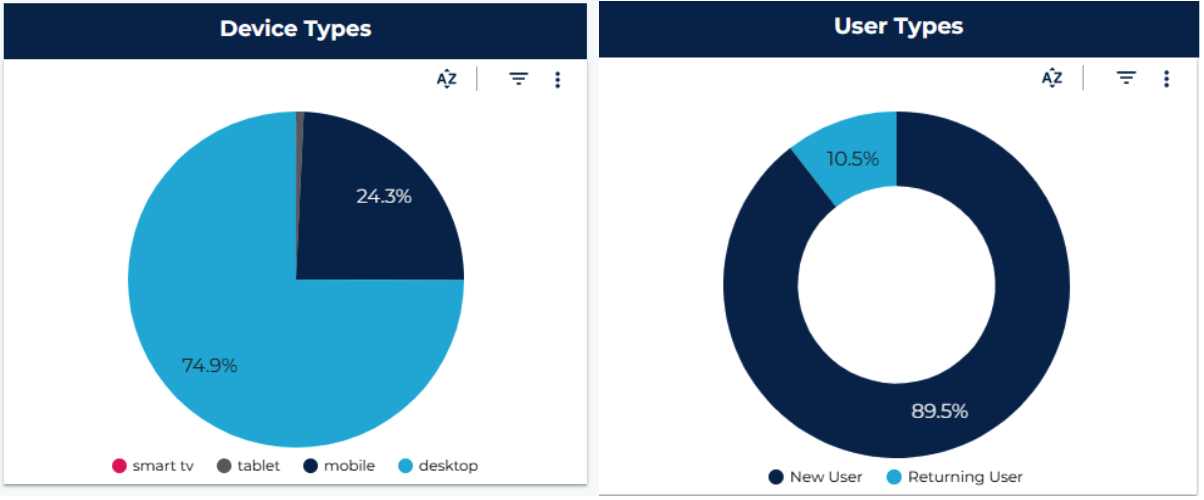
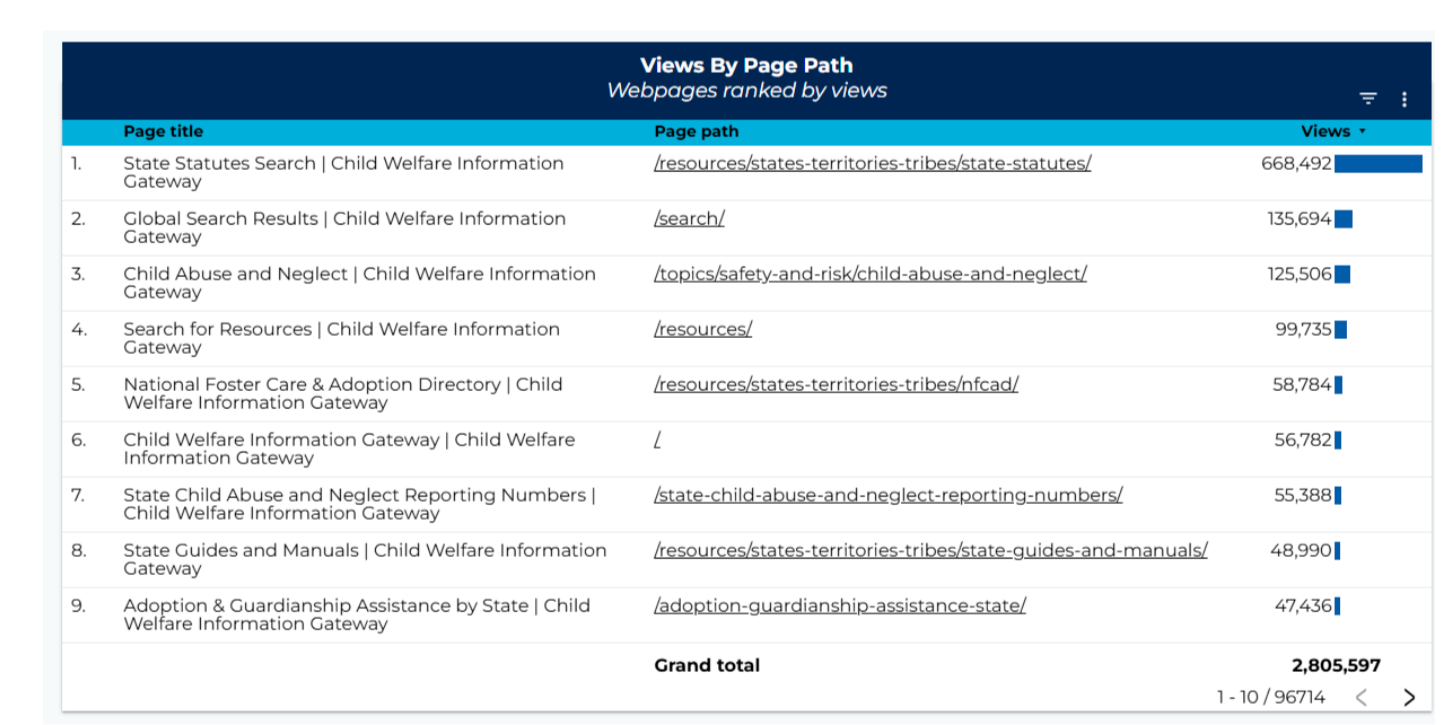
I also worked closely with the data science team to better understand how users interacted with the search system. Together, we reviewed search analytics, common search terms, filter usage, and patterns in user behavior. The data revealed that users frequently selected filters that produced little or no results, struggled to discover specialized resources such as Library publications, and often abandoned searches after encountering dead ends or error pages.
Combining qualitative feedback from stakeholders with quantitative search data allowed me to identify the highest-impact usability issues and make design decisions grounded in both user needs and evidence. These findings informed the redesign of the search workflow, filter organization, and content discoverability, resulting in a more intuitive and efficient search experience.
DATA AND SEARCH INSIGHTS
How might we create a unified search experience that helps users quickly find the right resources while reducing confusion, eliminating unnecessary errors, and improving the discoverability of specialized content?
DESIGN CHALLENGE
Simplify the search and filtering experience.
Reduce user frustration caused by broken links and error pages.
Improve the discoverability of training materials, state statutes, adoption resources, and scholarly publications.
Organize filters into a clearer, more manageable interface.
Create a search experience that accommodates both general users and professionals seeking specialized research.
GOALS
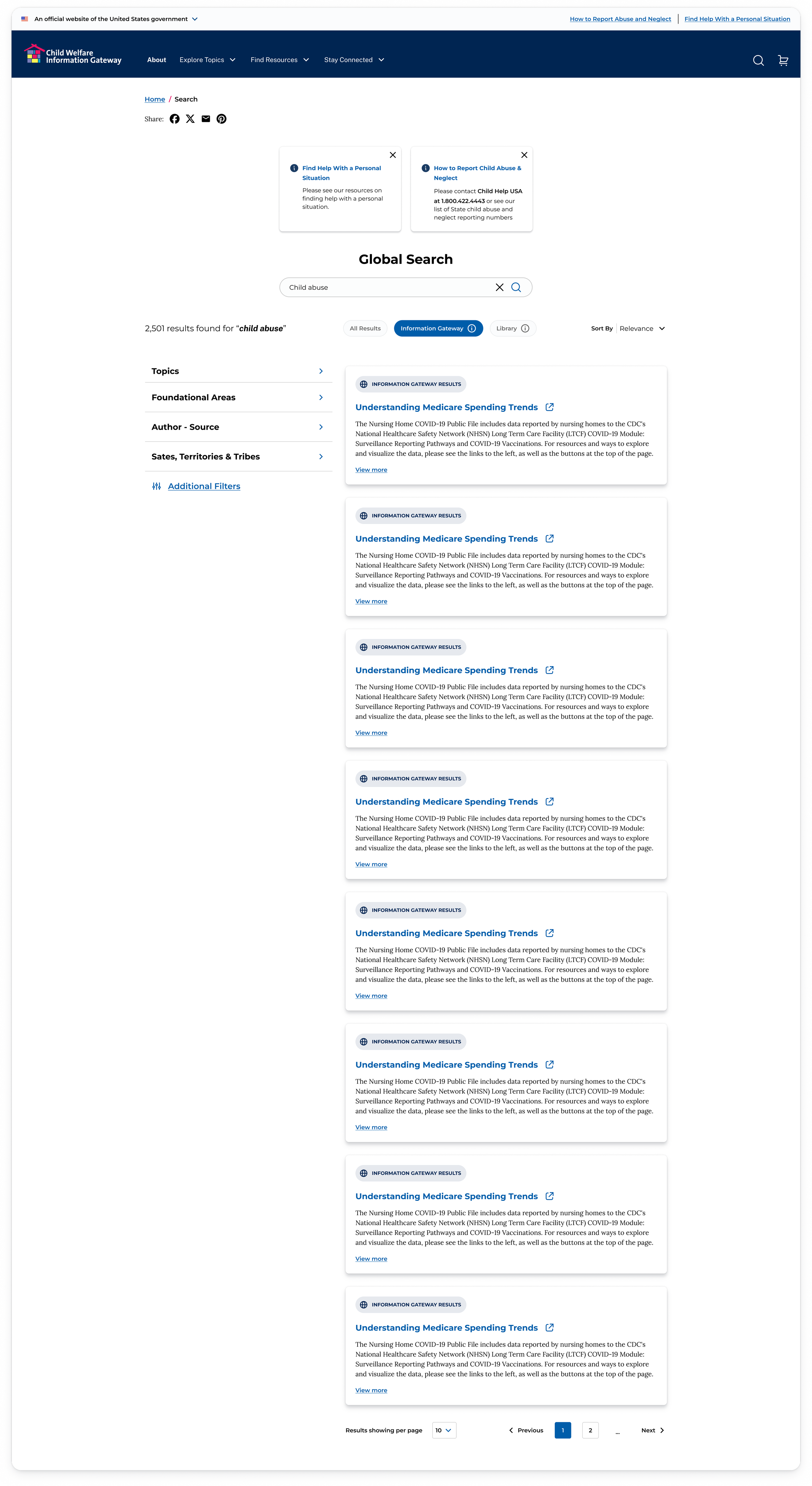
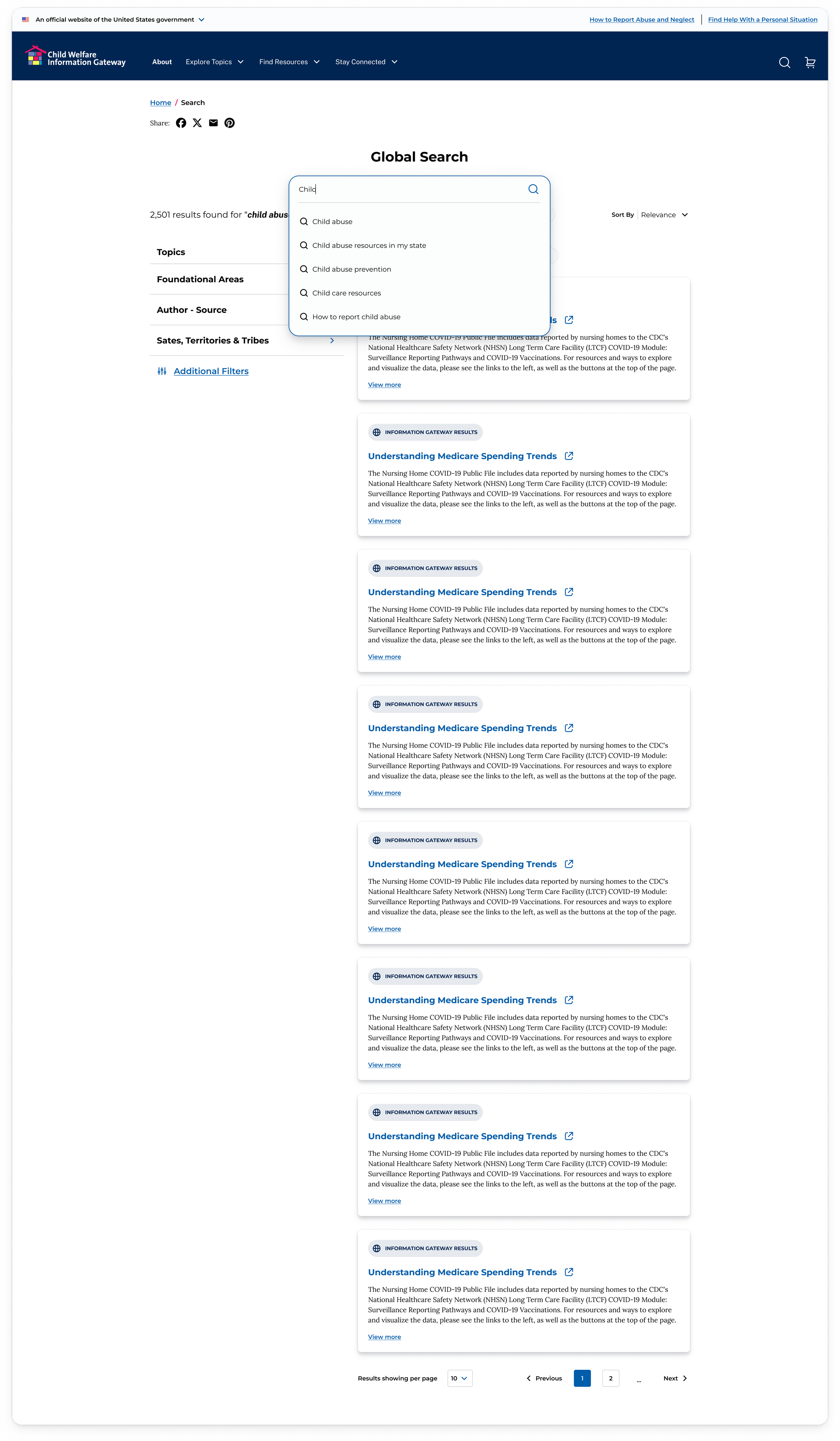
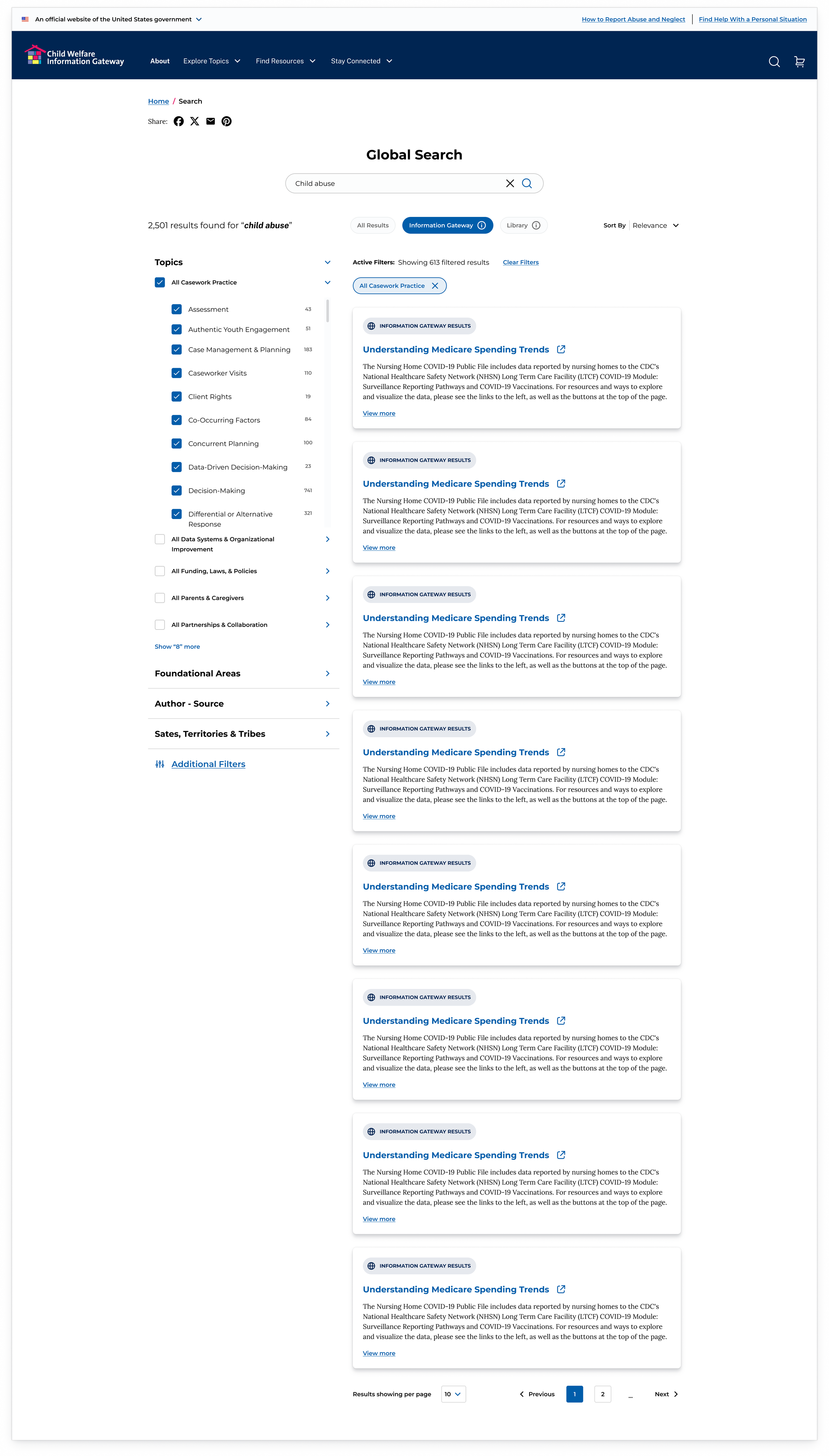
The redesigned experience consolidated search into a more streamlined workflow that made resources easier to discover.
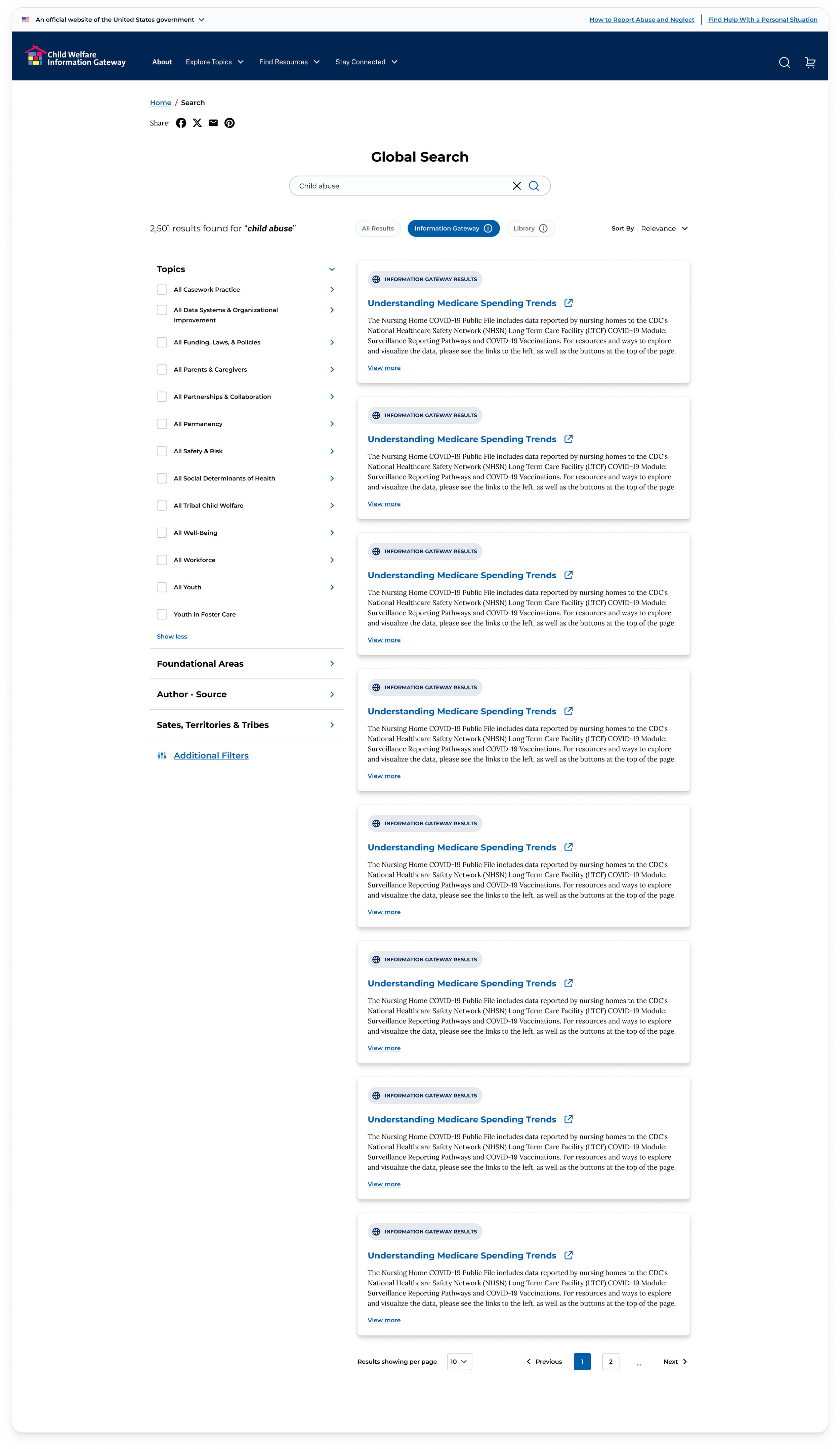
The filtering experience was restructured to reduce cognitive load by organizing filter options into logical categories and preventing users from selecting filters that would produce invalid results. Rather than presenting an overwhelming list of options, filters were designed to appear only when relevant, helping users refine their searches without unnecessary complexity.
Specialized Library resources were integrated into the primary search experience, making scholarly publications easier to discover without requiring users to navigate to a separate section of the website. This created a more unified search ecosystem where users could locate both general and research-based resources from one place.
The redesign also prioritized consistency and reliability by reducing navigation dead ends and ensuring users received meaningful search results instead of encountering broken pages or system errors.
DESIGN SOLUTION
Expected Impact

Improve task completion by helping users find information more quickly.

Increase discoverability of important child welfare resources.

Reduce frustration caused by invalid filters and error pages.

Simplify navigation through a cleaner and more organized filter interface.

AURA IDENTITY

AURA SOCIAL MEDIA MONITORING

AURA HELP CENTER
